A house fire in Red Bank hands you charred materials, pervasive smoke odor, and water damage all at the same time. The crew documents and removes the unsalvageable, cleans the salvageable, and dries the wet so the rebuild starts on a sound shell. A Red Bank home with a central return pulls smoke into the ductwork fast, so the HVAC is always part of our survey. Each affected room is documented for char, smoke, and water separately, so the estimate matches the actual damage in each space. One call to 551-237-7482 starts the smoke recovery the same day.
What Determines The Real Claim Size
A fire leaves two problems running at once: what the flames burned and what the hoses soaked. Soot deposited inside the HVAC becomes an odor reservoir that pushes residue back into the living space every time the system runs.
Our crew secures the structure, pulls the water the fire crew left, and cleans soot from the surfaces it actually reached — not just the obvious ones. We photograph each surface before and after cleaning so the soot work is shown, not merely claimed.
What Finishes A Fire Restoration
Standard cleaners and home-center ozone products mask smoke odor temporarily; they do not eliminate it. If smoke entered the HVAC, the ducts are cleaned to NADCA standards before re-occupancy so the system stops recirculating residue.
We make the cleaning-versus-replacement call on the condition of the system, not on what is easiest to bill. When source removal, material removal, and treatment are all done, the smell does not come back next month.
The Moisture Hiding In A Fire Loss — What Matters
The water used to extinguish a fire saturates framing, drywall, and contents that the flames never touched. The water carries soot deeper into porous materials, so leaving it in place spreads the contamination further.
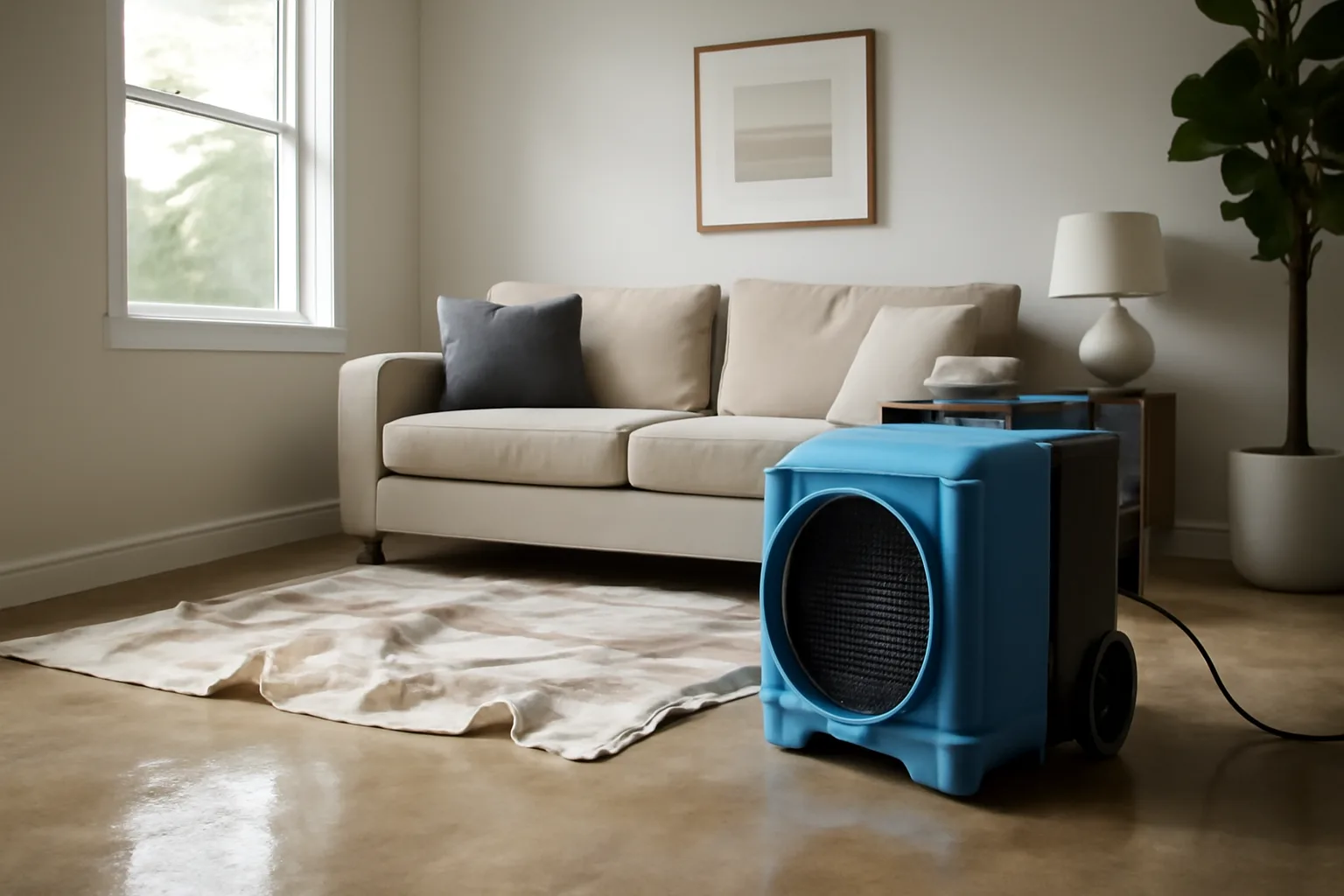
Our crew pulls the water the fire left, sizes drying equipment to the saturation, and tracks the dry-down to standard. That is why our fire response opens with stabilization and extraction, not just soot and odor — the water cannot wait.
The fire department does its job well, and what it leaves behind is a soaked building that starts to mold if left wet. We carry the water side through to verified-dry, so the rebuild sits on sound, dry framing instead of a hidden problem. We stabilize the opening, extract the suppression water, and dry the framing on metered readings before it can colonize. The longer the water sits, the more of the building crosses from cleanable to removable, exactly as in any water loss.
How Residue Etches A Home — The Honest Version
The residue a fire leaves does not just look bad — it chemically attacks surfaces every day it is left in place. The etching is cumulative, so the response window decides how much of the home survives the smoke.
We address the surfaces the smoke actually reached, not just the obvious ones, and we do it quickly. The sooner the residue is treated, the more of the home is cleaned rather than refinished or replaced.
What the fire spared, the soot can still claim, because acidic residue keeps working on surfaces over the following days. We treat the days after a fire as time-critical, because the chemistry of soot does not wait for a convenient appointment. We clean soot by surface type — wet method, dry method, abrasive — because what works on tile fails on raw wood. Glass, chrome, and finished metal pit and cloud; grout and porous stone absorb the residue and stain for good.
What A Pack-Out Actually Means — Honestly
Beyond the walls and framing, a fire affects the contents of a home, and those have their own recovery path. Items that can be cleaned are removed, treated off-site, and protected; items beyond saving are documented before disposal.
The inventory ties each item to its condition, so the adjuster can see exactly what the smoke and water reached. The same crew that restores the structure handles the contents, so the whole loss stays under one accountable roof.
A complete fire response covers the contents, not just the rooms, because the smoke does not stop at the drywall. A documented pack-out is what keeps the contents claim from becoming an afterthought the carrier underpays. Photographs of every packed-out item back the contents portion of the scope, leaving no gaps for the carrier to question. Removing the contents also clears the structure for the soot, odor, and drying work without putting belongings at risk.
One team for every part of the loss
A {city} loss tends to spill past a single service line — fire damage restoration often overlaps with water extraction, wind damage repair, mold remediation, sewage cleanup, reconstruction, and our crew handles all of it under one contract. The same crew and protocols reach and everywhere else across Monmouth County.
If you searched for restoration company near Red Bank, When the time comes, you get a crew that shows up, and the next step is simple. Call 551-237-7482 any hour, read The Paperwork Behind a Paid Red Bank Water Claim on our blog, or head back to our Red Bank home page to see everything we do.